
Shahed Drones: Complete Guide to Iran’s Kamikaze UAV Technology
What Are Shahed Drones?
Shahed drones are a class of loitering munitions, often referred to as kamikaze drones, developed by Iran. Unlike traditional drones used for surveillance, these unmanned aerial vehicles (UAVs) are designed to crash into targets and explode, making them both a weapon and a delivery system.
In simple terms, Shahed drones:
- Fly toward a target using GPS or pre-programmed coordinates
- Loiter in the air if needed
- Strike by detonating on impact
They have become one of the most talked-about weapons in modern warfare due to their low cost, long range, and high impact. Wikipedia
History and Development of Shahed Drones
Iran began developing drone technology in the 1980s during the Iran-Iraq war, but the Shahed series gained global attention in the 2010s.
Key milestones:
- Early UAV experiments focused on reconnaissance
- Transition to attack drones and loitering munitions
- Expansion due to international sanctions limiting access to advanced weapons
Sanctions played a crucial role. Instead of relying on expensive imported systems, Iran focused on cheap, scalable, and effective drone designs.
Today, Shahed drones are used not only by Iran but also by allied forces and have been exported or replicated globally, especially in conflict zones.
Types of Shahed Drones Explained

Shahed-131
- Smaller and lighter
- Shorter range
- Used for tactical strikes
Shahed-136
- Most widely used model
- Long-range strike capability
- Known in Russia as “Geran-2”
The Shahed-136 has become the symbol of drone warfare, especially in Ukraine.
How Do Shahed Drones Work?
Shahed drones operate using a relatively simple but effective system:
1. Launch
- Usually launched from truck-mounted racks
- Multiple drones can be fired in sequence
2. Navigation
- Uses GPS and inertial navigation systems
- Can follow pre-programmed routes
3. Flight
- Flies at low altitude, avoiding radar
- Speed around 100–185 km/h
4. Attack
- Crashes into the target
- Detonates onboard explosives
This simplicity is what makes them dangerous: they are easy to produce, deploy, and replace.
Technical Specifications of Shahed Drones
While specifications vary, the Shahed-136 typically includes:
- Range: Up to 1,000–2,500 km
- Speed: ~115 mph (185 km/h)
- Payload: ~40–50 kg explosives
- Guidance: GPS + inertial navigation
- Design: Delta-wing with rear propeller
These specs make it a long-range, low-cost strike weapon capable of hitting infrastructure, military bases, and urban targets.
Cost of Shahed Drones (Why They Are So Dangerous)
One of the biggest reasons Shahed drones dominate headlines is their cost-effectiveness.
Estimated Cost:
- $20,000 – $50,000 (early estimates)
- Around $35,000 commonly cited
- Mass production cost ~ $70,000
Compare that to:
- Air defense missiles: $1 million+ per shot
👉 This creates a major imbalance:
- Cheap drones vs expensive defense systems
Experts call this “cost asymmetry”, where attackers spend thousands, but defenders spend millions.
Role of Shahed Drones in the Russia-Ukraine War
Shahed drones gained global attention during the Russia-Ukraine war.
Key developments:
- Russia deployed Shahed-131 and 136 drones extensively
- Used in mass swarm attacks
- Targeted energy infrastructure, cities, and military sites
Ukraine reported:
- Thousands of drones launched
- Some attacks involving hundreds at once
This has transformed Ukraine into a testing ground for modern drone warfare.
Why Shahed Drones Are Hard to Stop
Shahed drones are not advanced—but they are effective.
Key reasons:
1. Low Altitude Flight
They fly close to the ground, making radar detection difficult.
2. Small Radar Signature
Their size and materials reduce detectability.
3. Swarm Attacks
Dozens or hundreds launched simultaneously overwhelm defenses.
4. Cost Advantage
Even if most are destroyed, a few hitting targets is enough.
In fact, some reports suggest low hit rates but high strategic impact, due to sheer volume.
How the US and NATO Are Countering Shahed Drones
The rise of Shahed drones has forced major military powers to rethink defense.
Current countermeasures:
1. Air Defense Systems
- Missile systems (expensive but effective)
2. Gatling Guns
- Limited success due to speed and swarm tactics
3. Electronic Warfare
- GPS jamming disrupts navigation
4. Interceptor Drones
- Cheap drones used to destroy incoming Shaheds
Ukraine has developed:
- Interceptor drones costing $1,000–$5,000
- Some systems down thousands of drones
This marks a shift toward low-cost vs low-cost warfare.
Shahed Drones vs Other Military Drones
| Feature | Shahed-136 | Bayraktar TB2 | MQ-9 Reaper |
|---|---|---|---|
| Type | Kamikaze | Surveillance/Strike | Advanced combat drone |
| Cost | ~$35K | ~$5M | ~$30M |
| Range | 1000+ km | 150 km | 1850 km |
| Reusable | ❌ No | ✅ Yes | ✅ Yes |
👉 Shahed drones are cheap but disposable, unlike advanced reusable drones.
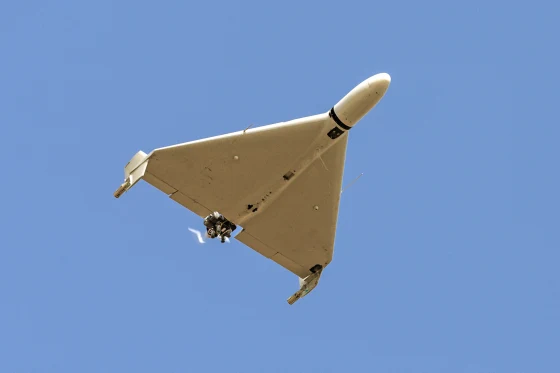
Visual Identification Guide
Shahed drones are easy to recognize:
- Delta (triangle) wing shape
- Rear-mounted propeller
- Loud “moped-like” engine sound
- Small, missile-like body
These features help both military and civilians identify incoming threats.
Strategic Importance in Modern Warfare
Shahed drones represent a major shift in warfare strategy.
Key impacts:
1. Low-Cost Warfare
Countries can wage war without expensive weapons.
2. Asymmetric Advantage
Weaker nations can challenge stronger militaries.
3. Saturation Attacks
Overwhelm defenses using numbers, not precision.
4. Psychological Impact
Constant drone threats create fear and disruption.
Recent conflicts show that drones now account for a large percentage of attacks, highlighting their growing importance.
Advantages and Disadvantages of Shahed Drones
✅ Advantages:
- Extremely cheap
- Long range
- Easy to mass-produce
- Effective in swarm attacks
❌ Disadvantages:
- Limited accuracy
- Vulnerable to jamming
- One-time use only
- Slow compared to missiles
Future of Shahed Drone Technology
The future of drone warfare is evolving rapidly.
Expected trends:
1. AI Integration
Autonomous targeting systems
2. Swarm Intelligence
Coordinated drone attacks
3. Improved Navigation
Anti-jamming GPS systems
4. Global Proliferation
More countries adopting similar designs
Experts believe Shahed drones are just the beginning of a new era of autonomous warfare.
Frequently Asked Questions (FAQ)
What are Shahed drones used for?
Shahed drones are used for attacking military and civilian targets by crashing into them with explosives.
How much does a Shahed drone cost?
Most estimates range between $20,000 and $70,000, depending on production and modifications.
Why are Shahed drones hard to intercept?
They fly low, have small radar signatures, and are often launched in large numbers.
Are Shahed drones accurate?
They are less accurate than missiles but compensate through volume and cost efficiency.
Who manufactures Shahed drones?
They are developed by Iran, with variants produced or assembled in other countries.