
Veggie List: A Complete Guide to Healthy and Delicious Vegetables
Vegetables are an important part of a healthy and balanced diet. They come in different colors, shapes, sizes, and flavors, making it easy to add variety to everyday meals. Whether you enjoy fresh salads, cooked dishes, soups, or smoothies, there are plenty of vegetables to choose from
A good veggie list can make grocery shopping easier and help you plan nutritious meals throughout the week. From leafy greens and root vegetables to colorful peppers and crunchy cucumbers, every vegetable can bring something useful to your plate.
What Is a Veggie List?
A veggie list is simply a collection of different vegetables that you can use for meal planning, grocery shopping, cooking, or learning about healthy foods. Having a list can help you remember your favorite vegetables and encourage you to try new ones.
Vegetables are generally low in calories and can provide important nutrients such as fiber, vitamins, minerals, and antioxidants. Eating a variety of vegetables veggie list is a simple way to make meals more colorful and nutritious.
Popular Veggies to Add to Your List
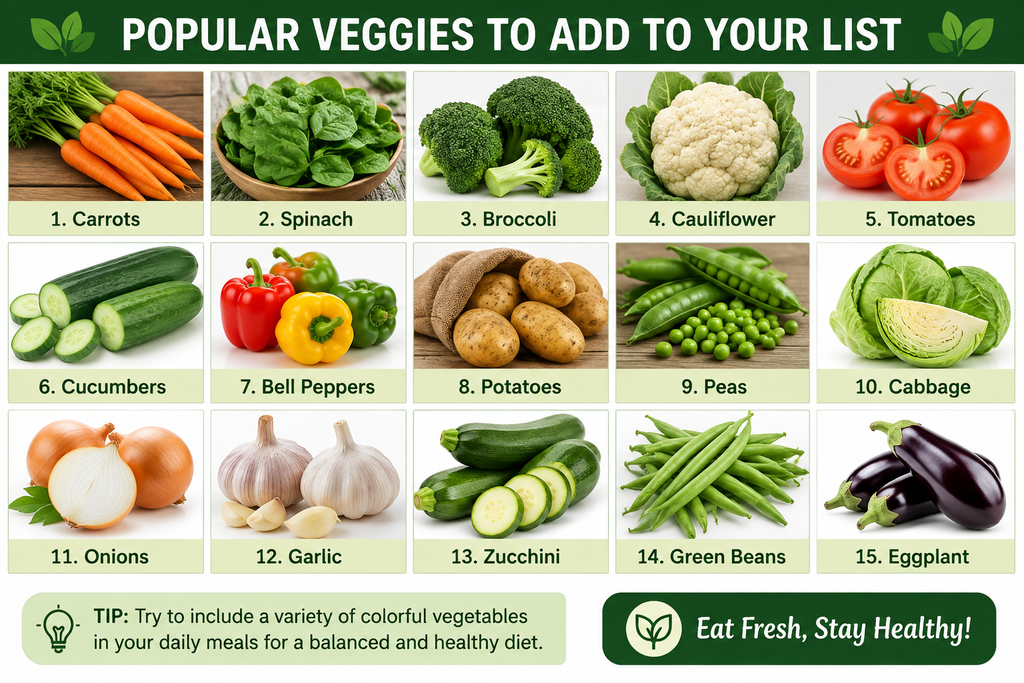
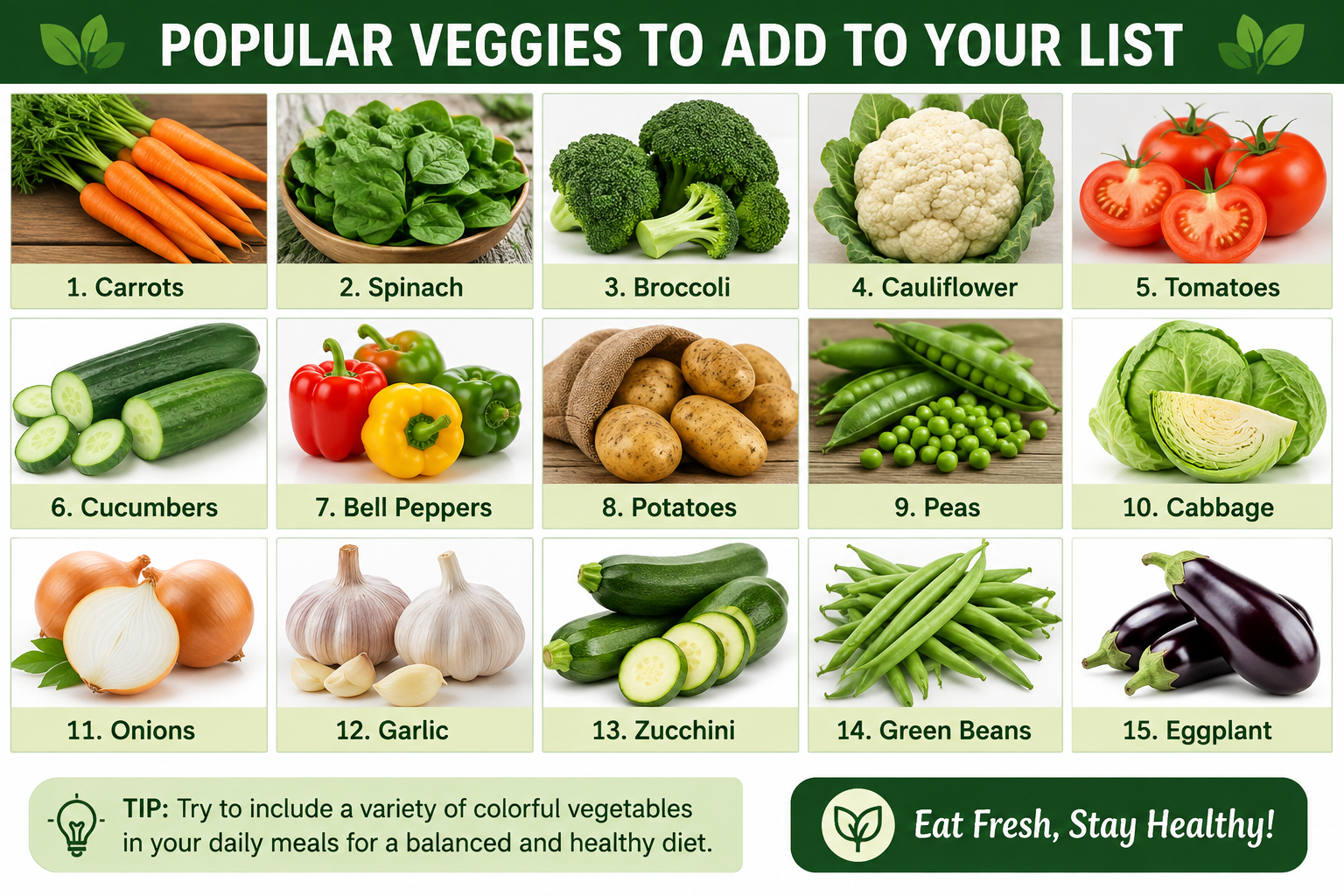
Here are some common vegetables that are easy to find and use in everyday cooking
1. Carrots
Carrots are naturally crunchy and slightly sweet. They can be eaten raw, added to salads, cooked with other vegetables, or used in soups and stews. They are also a convenient snack when sliced into sticks.
2. Spinach
Spinach is a popular leafy green vegetable. It can be added to omelets, soups, sandwiches, curries, and salads. Fresh spinach is especially easy to include veggie list in meals because it cooks quickly.
3. Broccoli
Broccoli is a versatile vegetable that can be steamed, roasted, boiled, or stir-fried. Its mild flavor makes it a good choice for both adults and children.
4. Cauliflower
Cauliflower is another flexible vegetable to include in your veggie list. You can cook it with spices, add it to curries, roast it in the oven, or use it in soups. It can also be chopped into small pieces and used as an alternative to rice in some recipes. With so many easy cooking options, cauliflower is a delicious and versatile choice for a healthy veggie list.
5. Tomatoes
Tomatoes are a popular choice to include in your veggie list. They are commonly used in salads, sauces, sandwiches, soups, and cooked dishes. They add a juicy texture and fresh flavor to many meals, making them a versatile and delicious vegetable for everyday cooking.
6. Cucumbers
Cucumbers are a refreshing and crunchy choice for your veggie list. They are commonly eaten raw in salads or served with meals. They can also be combined with yogurt and herbs to make a simple, refreshing side dish. Adding cucumbers to your veggie list is an easy way to enjoy a light and flavorful vegetable.
7. Bell Peppers
Bell peppers come in several colors, including green, red, yellow, and orange, making them a colorful choice for your veggie list. They can be eaten raw or cooked and are excellent for salads, sandwiches, stir-fries, and grilled dishes. Adding bell peppers to your veggie list is a simple way to bring more flavor, color, and variety to your meals.
8. Potatoes
Potatoes are one of the most commonly used vegetables around the world. They can be boiled, baked, roasted, mashed, or cooked with spices. Because they are filling, potatoes can be a useful part of many different meals.
9. Peas
Green peas are small but versatile. They can be added to rice, pasta, soups, curries, and vegetable mixes. Frozen peas are also convenient because they can be stored for longer periods.
10. Cabbage
Cabbage is an affordable and versatile vegetable. It can be used in salads, stir-fries, soups, wraps, and cooked vegetable dishes.
Leafy Green Vegetables
Leafy greens are an excellent category to include in your veggie list. Some popular options include:
- Spinach
- Kale
- Lettuce
- Swiss chard
- Collard greens
- Mustard greens
- Arugula
These vegetables can be used in salads, soups, sandwiches, wraps, and cooked meals. Mixing different leafy greens can also make salads more interesting.
Root Vegetables
Root vegetables grow underground and are often filling and flavorful. Popular choices include:
- Carrots
- Potatoes
- Sweet potatoes
- Turnips
- Radishes
- Beets
- Parsnips
Root vegetables can be roasted, boiled, mashed, or added to soups and stews. Their natural flavors work well with herbs and spices.
Colorful Vegetables
One easy way to make your meals more interesting is to choose vegetables of different colors. A colorful plate might include green broccoli, red tomatoes, orange carrots, yellow peppers, and purple cabbage.
Different vegetables contain different combinations of nutrients and plant compounds, so eating a variety can help you get a broader range of nutrients.
Why Should You Eat More Vegetables?
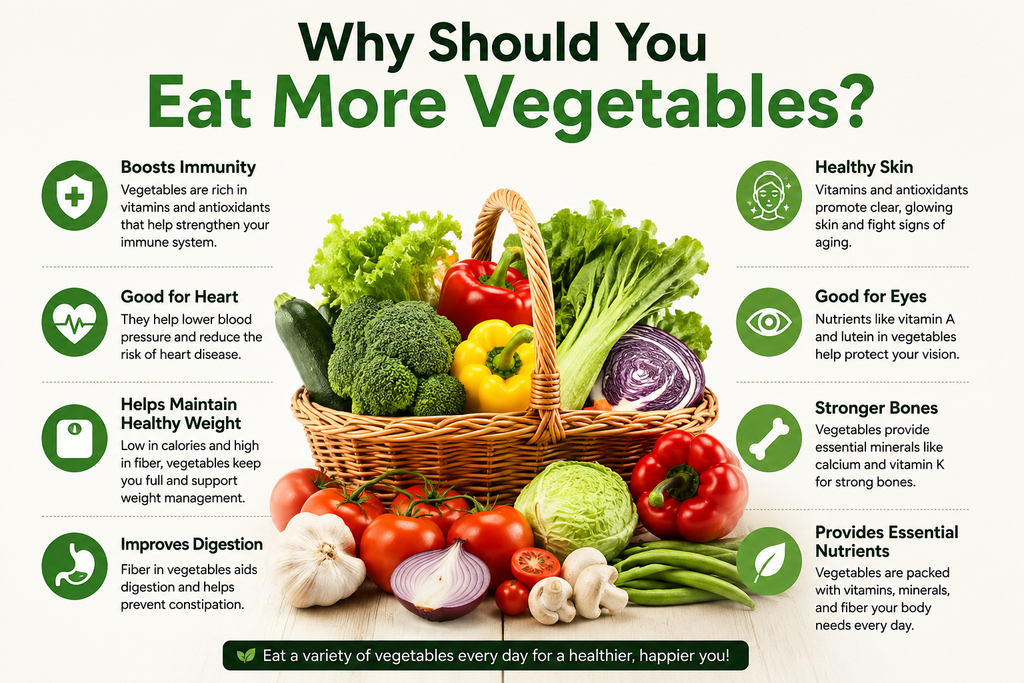
Adding vegetables to your daily meals can support a healthy lifestyle. Many vegetables provide dietary fiber, which is important for normal digestion. Vegetables can also contribute vitamins, minerals, and other beneficial plant compounds to your diet.
Another advantage is variety. Instead of eating the same meals every day, you can use different vegetables to create new combinations and flavors.
For example, you can make:
- Vegetable soup
- Fresh salad
- Stir-fried vegetables
- Roasted vegetables
- Vegetable curry
- Grilled vegetables
- Vegetable sandwiches
- Mixed vegetable rice
How to Create Your Own Veggie List
Creating a personal veggie list is simple. Start by writing down vegetables you already enjoy. Then add a few vegetables you would like to try.
You can organize your list into categories such as:
Leafy Greens: Spinach, lettuce, kale, mustard greens
Root Vegetables: Carrots, potatoes, beets, turnips
Cruciferous Vegetables: Broccoli, cauliflower, cabbage
Other Vegetables: Tomatoes, cucumbers, peppers, peas, zucchini
You can also divide your list according to how often you buy each vegetable. For example, vegetables you purchase every week can be placed at the top, while seasonal or occasional vegetables can be listed separately.
Tips for Buying Fresh Vegetables
When shopping for vegetables, look for produce that appears fresh and suitable for its type. Leafy greens should generally look crisp, while vegetables such as carrots and cucumbers should feel firm.
Buying vegetables that you actually plan to use can also help reduce food waste. If you have a busy schedule, frozen vegetables can be a convenient option for certain meals.
It is also helpful to keep a few versatile vegetables at home. Carrots, potatoes, onions, tomatoes, spinach, and bell peppers can be used in many different recipes.
Easy Ways to Add More Veggies to Your Meals

You do not need complicated recipes to eat more vegetables. Try adding sliced tomatoes and cucumbers to lunch, mixing spinach into an omelet, adding carrots and peas to rice, or serving roasted vegetables with dinner.
You can also keep chopped vegetables ready in the refrigerator for quick meals and snacks. Making vegetables easy to access can encourage you to use them more often.
Final Thoughts
A useful veggie list can make healthy meal planning easier and more enjoyable. With so many vegetables available, you can experiment with different colors, textures, flavors, and cooking methods.
From simple carrots and cucumbers to leafy greens, broccoli, cauliflower, peppers, and root vegetables, there are countless options to explore. The key is to include a variety of vegetables in your meals and choose options that fit your taste, budget, and lifestyle.
Start with a few vegetables you already love, add some new ones, and build your own veggie list over time. A little variety can make everyday meals more colorful, interesting, and nutritious.
Frequently Asked Questions (FAQ)
1. Why should I eat more vegetables every day?
Vegetables provide important vitamins, minerals, fiber, and antioxidants that support overall health. Eating a variety of vegetables can also help support healthy digestion and a balanced diet.
2. What are some easy ways to add vegetables to meals?
You can add vegetables to eggs, sandwiches, pasta, rice, soups, salads, and curries. You can also keep chopped carrots, cucumbers, and bell peppers ready for quick snacks.
3. Can I add vegetables to breakfast?
Yes! Try adding spinach, tomatoes, onions, mushrooms, or bell peppers to omelets, scrambled eggs, sandwiches, or breakfast wraps.
4. Are frozen vegetables a healthy choice?
Yes. Frozen vegetables can be a convenient and nutritious option, especially when fresh vegetables are not available.
5. How can I get children to eat more vegetables?
Make vegetables fun and easy to eat. Try colorful vegetable plates, homemade veggie wraps, soups, smoothies, or roasted vegetables, and let children choose between a few options.
6. Can I add vegetables to smoothies?
Yes. Mild vegetables such as spinach, cucumber, and carrots can be blended into smoothies with fruits and other ingredients.
7. What vegetables are good for healthy snacking?
Carrots, cucumbers, bell peppers, cherry tomatoes, celery, and broccoli are easy choices. You can enjoy them with hummus or another healthy dip.
8. How can I make vegetables taste better?
Try roasting, grilling, or stir-frying vegetables with herbs and spices. Different cooking methods can make vegetables more flavorful and enjoyable.
9. Should I eat different types of vegetables?
Yes. Eating a variety of vegetables helps you get a broader range of nutrients. Try including different colors and types throughout the week.
10. What is the easiest way to start eating more vegetables?
Start small. Add one extra serving of vegetables to a meal each day, keep ready-to-eat vegetables available, and gradually make them a regular part of your meals.
Read more articles https://todayswire.us/