
Traction Control Light: What It Means, Why It Comes On, and What to Do
A complete driver’s guide to diagnosing and understanding the TCS warning light.
Seeing a traction control warning light on your dashboard can be confusing — is it a serious problem, or is your car just doing its job? The short answer: it depends on whether the light is flashing or staying on solid. This guide explains what the indicator means, why it appears, and what steps to take next.
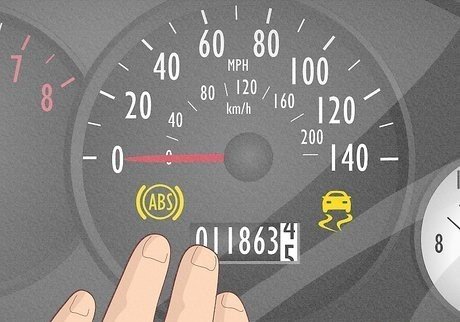
Dashboard warning lights, including traction control, are usually grouped near the speedometer.
What Is the Traction Control Light?
The traction control light is a dashboard indicator tied to your vehicle’s Traction Control System (TCS). It usually appears as a small car icon with wavy lines underneath, though the exact symbol can vary by manufacturer. You’ll typically find it on the instrument cluster near the speedometer, alongside other warning icons.
If the icon appears with the word OFF, that generally means the system has been manually switched off rather than experiencing a fault.
How Does Traction Control Work?
Your traction control system uses wheel-speed sensors to monitor how fast each wheel is spinning. If one tire starts spinning noticeably faster than the others — for example, while accelerating on a wet or icy road — the system steps in. It can reduce engine power, apply braking to the affected wheel, or both, helping the tire regain grip before the vehicle becomes unstable.

Traction control is especially valuable on wet, icy, snowy, or loose surfaces.
This makes TCS especially valuable on:
- Wet or rain-slicked roads
- Snow and ice
- Gravel or loose dirt
- Mud or uneven surfaces
Flashing vs. Solid Light: What’s the Difference?
This is the single most important thing to check first.
A Flashing Light Usually Means the System Is Working
If the light flashes briefly while you’re accelerating on a slippery surface, that’s normal. It means the system has detected wheel slip and is actively correcting it. Once your tires regain grip, the light should stop flashing on its own.
When to worry: if it keeps flashing on dry, normal roads, or flashes alongside other warning lights.
A Solid Light Usually Means the System Is Off or Has a Fault
A light that stays on continuously typically means one of two things:
- The system has been manually turned off (look for an “OFF” indicator).
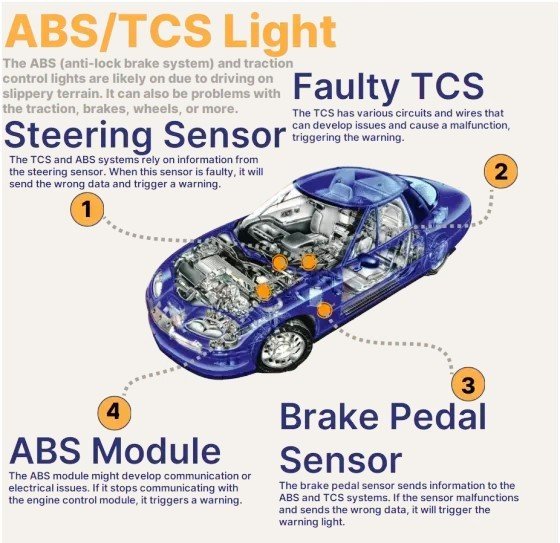
- The system is on, but has detected an issue — often with a sensor, wiring, or the ABS module.
If pressing the traction control button doesn’t turn the light off, a fault is likely present and a diagnostic scan is the next step.
Common Causes of a Traction Control Warning
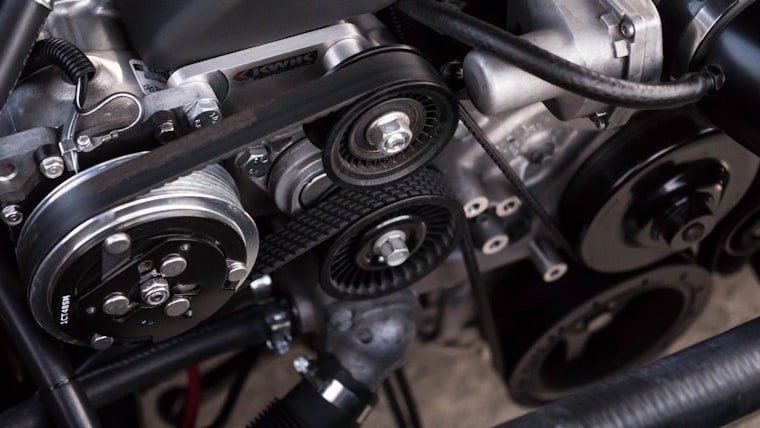
A faulty wheel-speed sensor is one of the most common triggers for a traction control warning.
| Cause | What’s Happening |
| Faulty wheel-speed sensor | Sends inaccurate readings to the control module, triggering a false warning |
| ABS-related fault | TCS and ABS share sensor data, so an ABS problem often lights up both warnings |
| Damaged wiring or connectors | Corrosion or loose connections can interrupt sensor communication |
| Steering-angle sensor issue | Incorrect steering data can affect stability and traction systems |
| Tire problems | Low pressure, uneven wear, or mismatched tire sizes distort wheel-speed readings |
Why ABS and Traction Control Lights Often Come On Together
Because both systems rely on the same wheel-speed sensor data, a single sensor or wiring fault can trigger both warnings simultaneously. If you see both lights, have the ABS system checked first — it’s usually the root cause.
Can You Still Drive With the Light On?
| Situation | Is It Safe to Drive? |
| Light flashes briefly, then turns off | Yes — this is normal system behavior |
| Light stays on continuously | Drive cautiously; get it inspected soon |
| TCS light + ABS or brake light together | Have it checked promptly; avoid aggressive driving or slippery roads until diagnosed |
Your car will likely still drive normally with a solid light on, but you won’t have the extra safety net traction control provides — which matters most exactly when road conditions get bad.
How to Turn the Traction Control Light Off
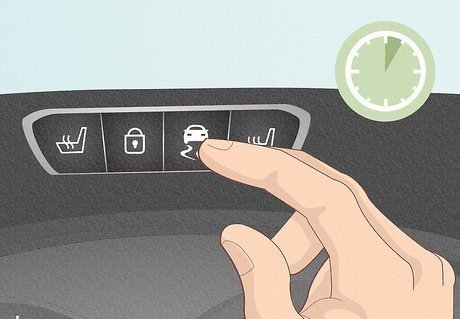
- Check for an OFF indicator — if the system was manually disabled, pressing the traction control button (location varies by vehicle) should turn it back on.
- Restart the vehicle — this can sometimes clear a temporary glitch.
- If the light returns, the issue isn’t user error — it’s a fault that needs a proper diagnostic scan.
How Mechanics Diagnose a Traction Control Fault
A diagnostic scan reads stored fault codes to pinpoint the exact cause of the warning.
A technician will typically:
- Scan the vehicle’s electronic control systems for stored fault codes.
- Inspect wheel-speed sensors, wiring, and connectors for damage or corrosion.
- Check tire condition, pressure, and sizing.
- Review live sensor data to catch a sensor giving inconsistent readings.
Diagnosing the exact cause before replacing parts helps avoid paying for repairs that don’t actually fix the problem.
Can Tire Issues Really Trigger This Light?
- Low tire pressure changes a tire’s rolling circumference, which can throw off speed readings.
- Worn or mismatched tires (different tread depth or size) can create the same effect.
If the warning appeared right after a tire change or new wheel installation, double-check that the sizing matches manufacturer specifications.
How Much Does It Cost to Fix?
Repair costs vary widely depending on the cause:
- System accidentally switched off: no cost — just turn it back on.
- Faulty wheel-speed sensor or wiring: typically a moderate, straightforward repair.
- ABS module or electronic control issue: can be more expensive to diagnose and repair.
Because the causes range so widely in cost, a proper diagnostic scan before any repair work is the best way to avoid overspending.
How to Prevent Traction Control Problems
- Check tire pressure monthly and before long trips.
- Replace tires once tread wear becomes significant.
- Use matched tire sizes across all four wheels.
- Don’t ignore ABS or brake warnings — catching related issues early can prevent traction control faults down the line.
Traction Control vs. Stability Control: What’s the Difference?
They’re related but not identical:
- Traction control mainly prevents wheel spin during acceleration.
- Stability control has a broader job — helping keep the entire vehicle on its intended path when it starts to lose control, not just at the wheels.
Because they share sensors and electronics, a single fault can sometimes trigger warnings for both systems at once.
Quick Action Guide
- Light flashing on a slippery road? Ease off the accelerator and let the system work.
- Light staying on? Check for an OFF indicator; if none, plan a diagnostic scan.
- Light on with other warnings (ABS, brake)? Get it inspected before your next drive, and avoid aggressive acceleration in the meantime.
Conclusion
The traction control light shows the status of your vehicle’s traction control system. A flashing light usually means the system is working, while a solid light may indicate a fault or that the system is off. If it stays on, have the vehicle checked to identify and fix the cause.
Frequently Asked Questions
1. What does the traction control light mean?
It shows the current status of your vehicle’s traction control system — active, off, or experiencing a fault.
2. Why is my traction control light on?
Either the system has been switched off manually, or it has detected a fault that needs diagnosis.
3. Why is my traction control light flashing?
It usually means the system is actively preventing your tires from slipping — normal during acceleration on wet or slippery roads.
4. Where is the traction control light located?
On the dashboard instrument cluster, typically near the speedometer and other warning icons.
5. Can I drive with the traction control light on?
Briefly, yes, if it’s just flashing during normal wheel-slip correction. A light that stays on should be checked soon.
6. Can bad tires cause the light to come on?
Yes — low pressure, excessive wear, or mismatched tire sizes can all affect the readings the system depends on.
7. Can a bad wheel-speed sensor cause the light?
Yes, this is one of the most common causes of a persistent traction control warning.
8. How do I turn off the traction control light?
If it was switched off, press the traction control button to reactivate it. If the light remains on, the vehicle likely needs a diagnostic scan.
9. Why are the ABS and traction control lights on together?
Both systems share wheel-speed sensor data, so a fault in one often triggers both warnings.
10. Does the traction control light always mean something is wrong?
No — a flashing light is often just the system doing its job correctly.
Reviewed for accuracy against standard automotive diagnostic practices. Always consult your owner’s manual or a certified technician for vehicle-specific guidance.